
A bright smile can make a strong first impression. Clean, white teeth are often linked with good health and personal care. Because of this, many people today look for ways to improve the appearance of their teeth and feel more confident when they smile.
Over time, however, teeth naturally lose their brightness. Daily habits like drinking tea or coffee, eating certain foods, or simply getting older can cause teeth to look dull or stained. This is where cosmetic teeth whitening becomes helpful. It is a simple and popular method used to make teeth look lighter and more attractive.
Understanding the Basic Structure of Teeth
To understand how whitening works, it helps to know what teeth are made of.
Teeth have three main layers:
- The outer layer is called enamel. It is strong and slightly see-through.
- Beneath that is dentin, which has a yellowish color.
- Inside is the pulp, where nerves and blood vessels are found.
Even though enamel looks smooth, it has tiny openings. These small spaces allow colors from food and drinks to settle in over time. This is one of the main reasons teeth become stained.
Why Teeth Become Discolored
Tooth discoloration can happen for different reasons. It is usually grouped into two main types.
Surface Stains
These stains appear on the outer layer of the teeth. They are often caused by things like coffee, tea, tobacco, and strongly colored foods. These stains are usually easier to remove.
Deep Stains
These stains form inside the tooth. They may be caused by aging, certain medicines, or injury to the tooth. Deep stains are harder to treat and may need stronger whitening methods.
The Science Behind Cosmetic Teeth Whitening
Cosmetic teeth whitening is not just about cleaning the surface of teeth. It involves a chemical process that changes how stains appear.
Most whitening products contain ingredients like hydrogen peroxide or carbamide peroxide. These are safe bleaching agents used in dentistry.
When these ingredients are applied to the teeth, they release oxygen. This oxygen goes into the enamel and reacts with the stain particles. The reaction breaks large, dark-colored molecules into smaller and lighter ones. As a result, the teeth begin to look whiter.
How Teeth Look Whiter After Treatment
Teeth do not actually get painted white during whitening. Instead, the process changes how light interacts with the tooth.
After the stain particles are broken down:
- Teeth reflect more light
- Less color is absorbed
- The overall appearance becomes brighter
This is why the smile looks cleaner and whiter after treatment.
Common Methods Used for Whitening
There are different ways to do cosmetic teeth whitening. Each method uses similar ingredients but works in slightly different ways.
Professional Whitening at a Clinic
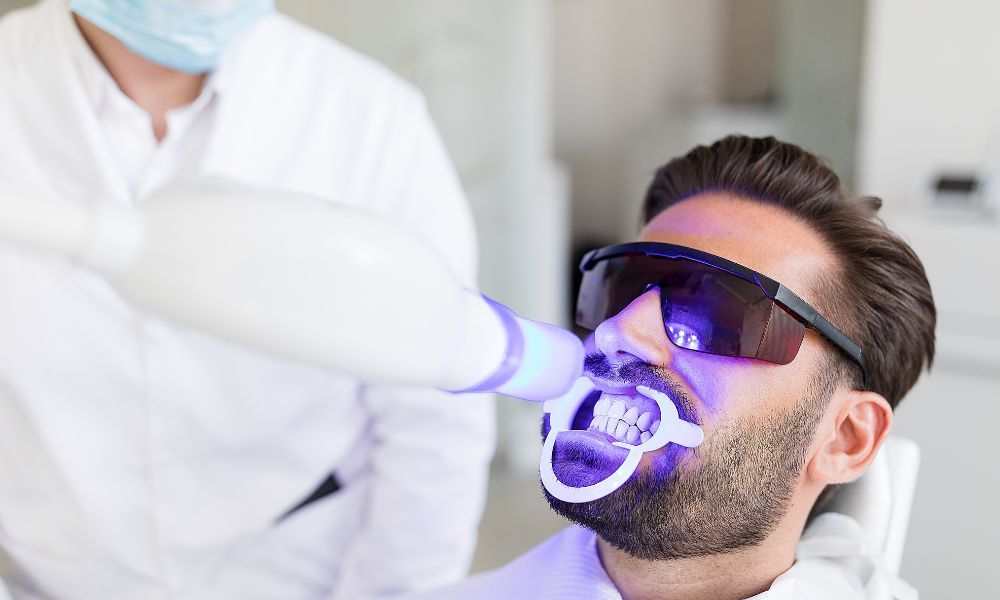
This method is done by a dentist. A strong whitening gel is applied to the teeth, and the gums are protected during the process. Sometimes, a special light is used to speed things up.
This method works quickly because it uses a higher strength of whitening agent.
At-Home Whitening Kits
These kits include trays, strips, or gels that can be used at home. They contain a lower amount of whitening ingredients, so the process takes longer, usually a few days or weeks.
Whitening Toothpaste
Whitening toothpaste helps remove stains from the surface of teeth. It does not change the deeper color of the teeth because it does not contain strong bleaching agents.
Does Light Help in Whitening?
Some treatments include the use of LED or UV light. Many people think the light itself whitens the teeth, but that is not fully true.
The main role of light is to help speed up the reaction of the whitening gel. The actual whitening still comes from the chemical ingredients.
Tooth Sensitivity and Safety
Some people may feel slight sensitivity during or after whitening. This happens because the whitening ingredients reach the inner part of the tooth.
This sensitivity is usually temporary and goes away after a short time.
When done properly, cosmetic teeth whitening is considered safe. It does not cause permanent damage to the enamel. Dentists may suggest using fluoride or special toothpaste to reduce sensitivity after treatment.
What Affects Whitening Results
Not everyone gets the same results from whitening. Several factors can influence how well it works.
Natural tooth color plays a role. Teeth with a yellow shade often respond better than those with a gray tone.
The type of stain also matters. Surface stains are easier to remove than deep ones.
Age can also affect results. As people get older, the enamel becomes thinner, and the yellow dentin shows more.
The strength of the whitening product and how long it is used also impact the final result.
What Whitening Cannot Fix
Cosmetic teeth whitening does not work on everything. It cannot change the color of:
- Crowns
- Fillings
- Veneers
These materials do not react to whitening agents. In such cases, other dental treatments may be needed.
How Long Do Results Last
The results of whitening are not permanent, but they can last a long time with proper care.
Most people enjoy results for several months to a couple of years. This depends on daily habits.
Drinking a lot of coffee or tea, smoking, and poor oral hygiene can cause stains to return faster.
Regular brushing, limiting stain-causing foods, and occasional touch-ups can help maintain the results.
New Developments in Whitening
Modern dental care continues to improve whitening methods. Some newer options aim to reduce sensitivity while still giving good results.
For example, some products now include ingredients that help rebuild enamel while whitening the teeth. Others use alternatives to peroxide for a gentler experience.
These improvements make cosmetic teeth whitening more comfortable and suitable for more people.
Common Misunderstandings
There are a few common myths about whitening that should be cleared up.
Some people believe whitening damages enamel, but this is not true when done correctly.
Others think the results will last forever, but regular care is needed to maintain the brightness.
There is also a belief that home remedies work just as well, but some of these can actually harm the teeth instead of helping.
Who Can Benefit from Whitening
Cosmetic teeth whitening is a good option for people who want to improve the look of their smile.
It works best for those who have healthy teeth and mild to moderate staining. However, it may not be suitable for everyone, especially those with serious dental issues or very sensitive teeth.
It is always a good idea to consult a dental professional before starting any whitening treatment.
Final Thoughts
Cosmetic teeth whitening is a simple yet effective way to improve the appearance of your smile. It works through a scientific process that breaks down stains and makes teeth reflect more light.
Understanding how it works can help you choose the right method and set realistic expectations. With proper care and the right approach, you can enjoy a brighter and more confident smile for a long time.