
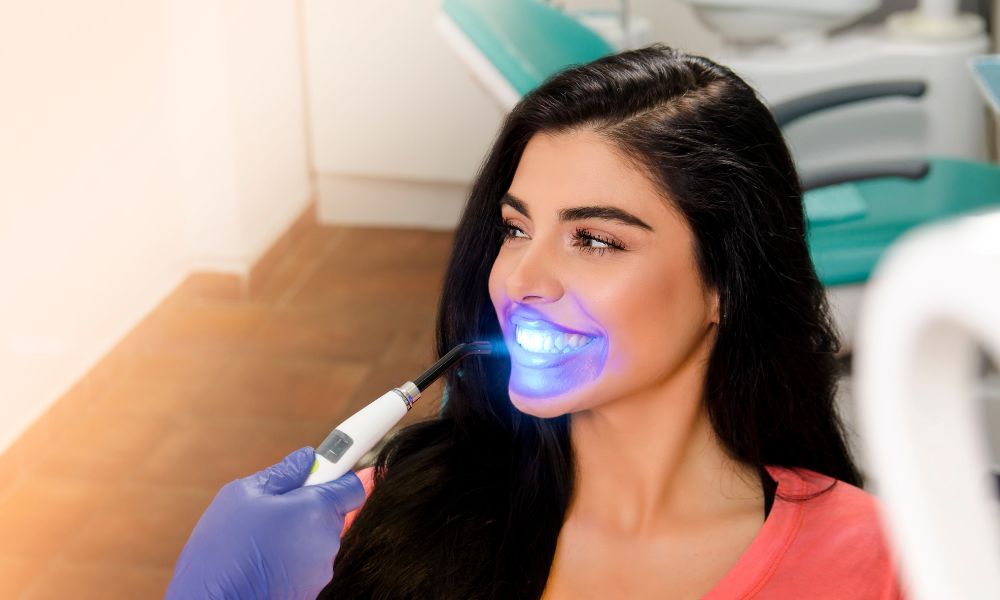
Having a bright, white smile can make a big difference in how we feel about ourselves. A clean, radiant smile is often associated with confidence, health, and even youthfulness. Because of this, more people are paying attention to their dental appearance and looking for effective ways to keep their teeth looking their best. Teeth whitening has become one of the most popular cosmetic dental procedures for anyone who wants to enhance their smile.
Teeth can become stained or yellowed over time for many reasons. Daily habits such as drinking coffee, tea, or red wine, smoking, or consuming certain foods can affect the color of your teeth. Even as we age, the outer layer of enamel can thin, revealing the natural yellow color of the dentin underneath. Because teeth can discolor for different reasons, the method chosen for whitening can make a significant difference in how effective the treatment is. Two of the most common whitening methods are laser bleaching teeth and traditional whitening treatments.
Understanding Why Teeth Stain
Before choosing a whitening method, it’s important to understand why teeth lose their natural brightness. Discoloration can happen due to several factors:
- Age: Enamel wears down over time, showing the yellow dentin below.
- Diet: Dark-colored foods and drinks like coffee, tea, wine, and certain sauces can leave stains.
- Smoking or Tobacco Use: Nicotine and tar are major causes of yellowing.
- Medication: Certain antibiotics and other medications can cause stains.
- Oral Hygiene: Plaque and tartar buildup can make teeth look dull and discolored.
Knowing the type of stain—whether it is surface-level or deep inside the tooth—can help decide which whitening method is best.
What Is Traditional Whitening?
Traditional whitening refers to methods people have used for years to improve the color of their teeth. These methods include:
- Whitening toothpaste, which contains mild abrasives or chemicals to remove surface stains.
- Whitening strips that are coated with a peroxide gel and applied to the teeth.
- Custom-made whitening trays provided by dentists that hold a bleaching gel on your teeth for a set period.
- Over-the-counter whitening gels or mouthwashes with mild bleaching agents.
Traditional whitening is usually safe, affordable, and convenient. It works well for surface stains caused by food, drink, or smoking. However, it often takes longer to see results, and the effects may fade faster than professional treatments. Many people also need to continue using whitening products to maintain their results.
What Is Laser Bleaching Teeth?
Laser bleaching of teeth is a professional treatment done in a dental clinic. It uses a strong bleaching gel combined with a laser or light source to whiten teeth quickly. Here’s how the process works:
- The dentist applies a high-strength whitening gel to the teeth.
- A laser or light is directed at the teeth to activate the gel.
- The laser breaks down stains and brightens the teeth from the inside out.
This method is often called in-office bleaching because it is done at the dental clinic and usually takes only one session to see significant results.
Advantages of Laser Bleaching Teeth
- Produces noticeable results immediately after the treatment.
- Very effective for deep or stubborn stains that traditional methods cannot remove.
- The dentist can adjust the treatment depending on your tooth sensitivity.
- Performed under professional supervision, making it safer than attempting high-strength whitening at home.
- Can make teeth several shades lighter in just one session.
Possible Drawbacks
- The treatment is more expensive than traditional whitening methods.
- Some people may experience temporary tooth or gum sensitivity.
- Not suitable for patients with certain dental problems, like cavities or weakened enamel.
Comparing Laser Bleaching Teeth and Traditional Whitening
When deciding which whitening method is better, several factors should be considered, including speed, effectiveness, longevity, safety, convenience, and cost.
Speed of Results
Laser bleaching teeth gives fast results. Many people notice a difference after just one session, and teeth can become several shades lighter. Traditional whitening, on the other hand, takes longer. Products like whitening strips or custom trays usually need daily use for one to two weeks to show significant changes.
Effectiveness
Laser bleaching teeth is more effective for deep stains caused by aging, trauma, or medications. It penetrates deeper into the tooth structure and provides more uniform whitening. Traditional whitening is best for surface stains from coffee, tea, or smoking, and may not work as well for intrinsic stains.
Longevity of Results
Laser bleaching teeth usually lasts longer, often one to three years, depending on diet and oral habits. Traditional whitening tends to fade faster, and touch-ups are needed more frequently to maintain the results.
Safety and Sensitivity
Both methods are generally safe when used properly. Laser bleaching teeth is done under professional supervision, which helps reduce risks. However, high-strength gels may cause temporary sensitivity. Traditional whitening is usually gentler but can still cause mild sensitivity if used frequently.
Convenience
Traditional whitening is convenient because it can be done at home at any time. Laser bleaching teeth requires an appointment at a dental clinic and may take one to two hours per session. Some people prefer the convenience of at-home methods, while others want the fast results of an in-office procedure.
Cost
Laser bleaching teeth is more expensive because it involves professional supervision and high-strength materials. Traditional whitening is more affordable, with options ranging from over-the-counter products to custom trays provided by dentists.
Who Should Choose Laser Bleaching Teeth?
Laser bleaching teeth is ideal for people who:
- Have deep, stubborn stains that do not respond to traditional whitening.
- Want immediate and dramatic results.
- Have good oral health without untreated cavities or gum issues.
- Are you willing to invest in a professional treatment for faster results.
It may not be the best option for people with very sensitive teeth, enamel erosion, or a tight budget.
Who Should Opt for Traditional Whitening?
Traditional whitening works well for individuals who:
- Have mild surface stains.
- Prefer a gradual whitening process.
- Want an affordable option.
- Need a convenient at-home solution.
- Have sensitive teeth and want to avoid high-strength gels.
Many people start with traditional whitening and switch to laser treatments if they want faster or more dramatic results.
How to Maintain Whiter Teeth
Whichever method you choose, maintaining your results is important. Some tips include:
- Brushing twice a day with a fluoride toothpaste.
- Flossing daily to prevent plaque buildup.
- Limiting foods and drinks that can stain teeth.
- Avoiding smoking or using tobacco products.
- Regular dental check-ups and professional cleanings.
- Using whitening toothpaste or at-home touch-ups as recommended by your dentist.
Good oral hygiene not only keeps your teeth healthy but also prolongs the results of whitening treatments.
Final Thoughts
Both laser bleaching teeth and traditional whitening have their own advantages and disadvantages. Laser bleaching teeth is the better choice for fast, dramatic results and deeper stains, while traditional whitening is suitable for surface stains, gradual whitening, and those on a budget.
Choosing the right method depends on your needs, lifestyle, and the condition of your teeth. Consulting with a dentist can help determine the cause of your tooth discoloration and which treatment will be most effective.
A bright, healthy smile can boost confidence and improve how others perceive you. Whether you choose laser bleaching teeth or traditional whitening, taking care of your teeth through proper oral hygiene and lifestyle choices will help maintain your smile for years to come.