
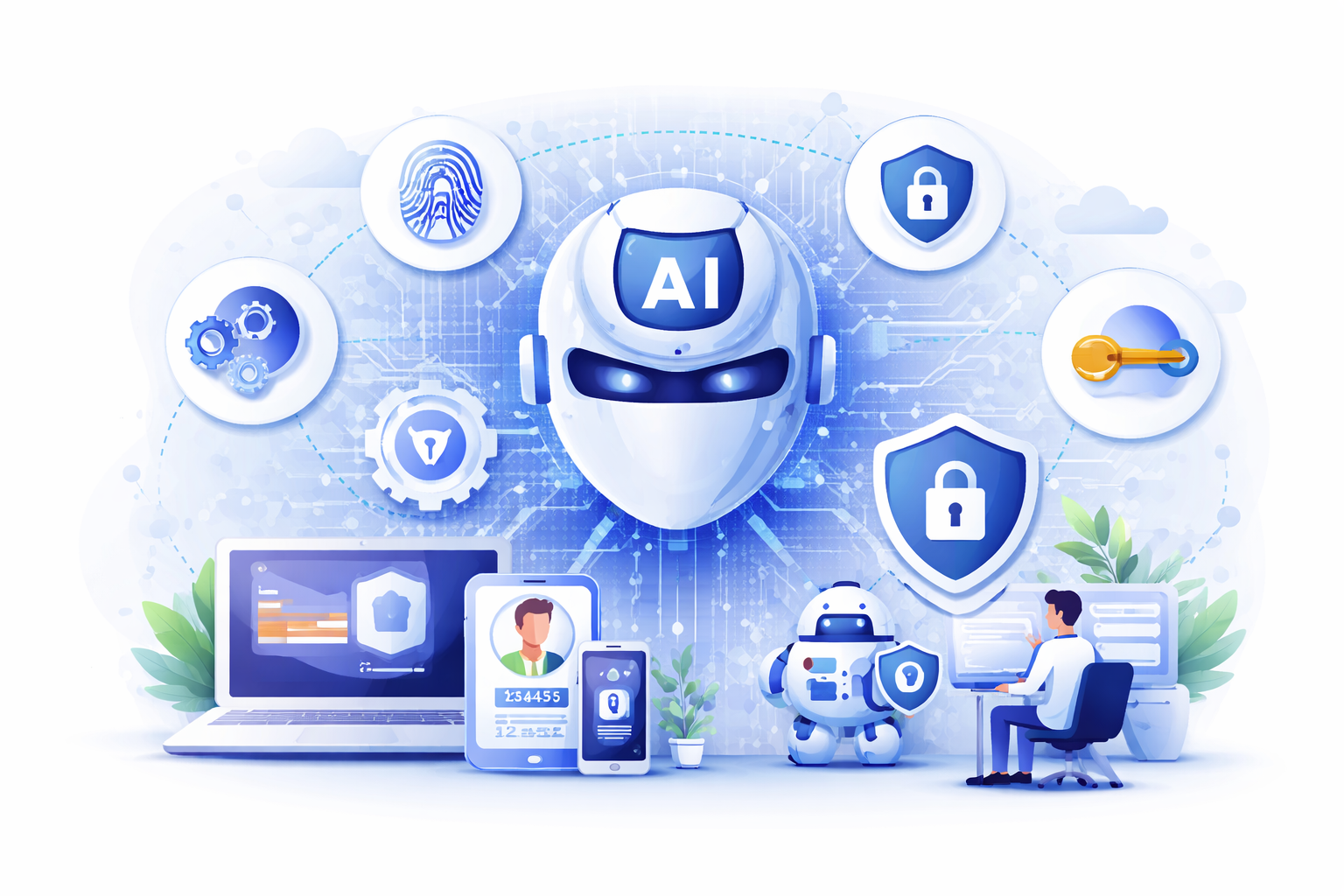
AI in identity and access management is transforming how businesses secure systems, manage users, and detect threats. Traditional IAM systems depend heavily on manual rules and fixed policies, but AI brings automation, intelligence, and real-time decision-making into the process.
With increasing cyber threats and complex IT environments, AI helps businesses stay ahead by improving security, reducing human errors, and making access control smarter. This guide explains the real role of AI in IAM in a clear and practical way.
Why AI in identity and access management is becoming essential
AI in identity and access management is becoming essential because modern systems are too complex to manage manually. Businesses deal with thousands of users, devices, and access requests every day.
AI helps analyze this data quickly and make smart decisions in real time. It improves accuracy, reduces workload, and strengthens security. Without AI, managing large-scale access systems can become slow, error-prone, and difficult to control effectively.
How AI improves identity and access management systems
Identity and access management systems become more efficient when AI is integrated into them. AI can analyze user behavior, detect patterns, and identify unusual activities.
It helps automate tasks like access approvals, user verification, and permission updates. This reduces manual effort and ensures faster responses. AI also improves decision-making by using data instead of relying only on predefined rules.
Role of AI in detecting threats and unusual behavior
One of the most important roles of AI in IAM is threat detection. AI continuously monitors user activity and identifies behavior that does not match normal patterns.
For example, if a user logs in from an unusual location or tries to access restricted data, AI can detect it instantly. It can trigger alerts or block access automatically. This proactive approach helps prevent security breaches before they happen.
Enhancing authentication with AI-based security
AI improves authentication by making it more dynamic and secure. Instead of relying only on passwords, AI evaluates multiple factors to verify identity.
These may include user behavior, device information, and login patterns. This creates a more secure authentication process without making it complicated for users. It also reduces the chances of unauthorized access significantly.
Supporting cloud identity management with AI
Cloud identity management becomes more effective when combined with AI. AI helps manage access across multiple cloud platforms by analyzing usage and behavior.
It ensures that users get appropriate access based on their activity and role. AI also helps detect risks in cloud environments where access is more distributed. This improves security and simplifies management in cloud-based systems.
AI and zero trust identity and access management
Zero trust identity and access management works perfectly with AI because both focus on continuous verification and security.
AI supports zero trust by analyzing user behavior in real time and verifying access at every step. It ensures that no user or device is trusted automatically. This combination creates a strong security model that protects systems from both internal and external threats.
Automating access control and decision-making
AI plays a major role in automating access control processes. It can decide whether to grant or deny access based on real-time data and risk analysis.
This reduces delays and improves efficiency. It also ensures consistent decisions without human errors. Automated access control is especially useful in large organizations where manual management is not practical.
Reducing human errors and improving efficiency
Manual IAM systems often lead to errors such as incorrect permissions or delayed access updates. AI helps reduce these issues by automating repetitive tasks.
It ensures that permissions are updated correctly and on time. This improves system accuracy and reduces security risks. It also allows IT teams to focus on more important tasks instead of routine management work.
Improving compliance and audit processes
AI helps businesses maintain compliance by tracking user activity and ensuring proper access control. It automatically records actions and generates reports.
This makes audits easier and faster. It also ensures that businesses meet regulatory requirements without extra effort. AI-driven insights help identify gaps and improve compliance over time.
Future of AI in identity and access management
AI is expected to play an even bigger role in IAM systems in the future. It will become more advanced in detecting threats and managing access.
Businesses will rely more on AI for real-time decision-making and predictive security. This will make IAM systems more intelligent, efficient, and secure. AI will continue to shape the future of access management in a significant way.
Final thoughts on AI in IAM
AI in identity and access management is changing how businesses handle security and user access. It brings automation, intelligence, and faster decision-making into IAM systems.
By using AI, businesses can improve security, reduce risks, and manage access more efficiently. It is becoming an essential part of modern IAM strategies and will continue to grow in importance.