
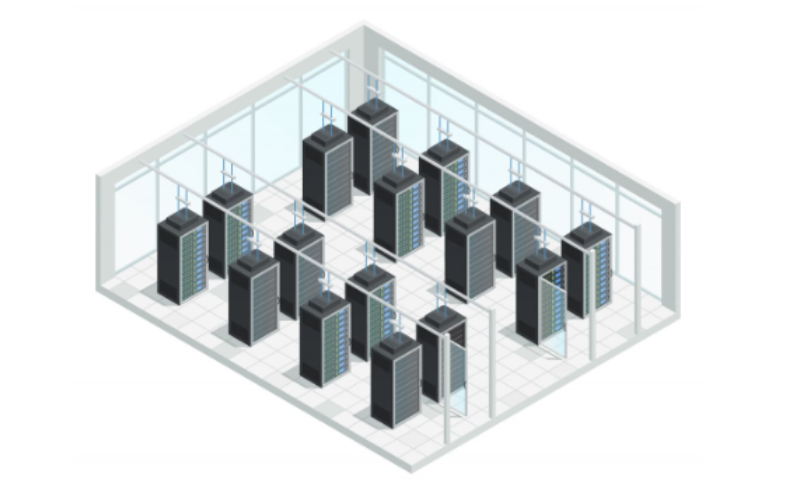
Data centers are essential for modern businesses and play a vital role in storing, processing, and managing data. Whether you're hosting servers, network equipment, or storage devices, your data center’s infrastructure must be organized and optimized for maximum efficiency. A critical component of any data center is the data center rack. Racks help you organize your equipment, improve airflow, and maximize space utilization, ultimately ensuring your data center operates smoothly.
There are various types of data center racks, each designed for specific applications and needs. Understanding the different types of racks and their benefits can help you make informed decisions when planning or upgrading your data center. In this article, we’ll break down the various types of data center racks, how they differ, and which one might be the best fit for your business.
What Is a Data Center Rack?
Before diving into the various types of data center racks, it's essential to understand what a data center rack is and why it is needed.
A data center rack is a framework designed to store servers, network devices, storage devices, and other IT infrastructure. These racks help organize and secure the equipment, maximize space, ensure proper airflow for cooling, and streamline maintenance and access to components. Racks come in various sizes and configurations, allowing businesses to choose the right one based on their specific needs.
Now that we have a basic understanding, let’s look at the most common types of data center racks and what makes them different.
1. Open Frame Racks
Open frame racks are one of the most commonly used types of data center racks. These racks are simple and do not have any enclosed sides or doors, which makes them easy to access and manage.
1.1 Benefits of Open Frame Racks
- Cost-Effective: Open frame racks are typically less expensive than enclosed racks because they are simpler in design.
- Improved Airflow: Without doors or side panels, airflow is not restricted, which helps cool down the equipment efficiently.
- Ease of Access: Since there are no panels or doors, it’s easy for technicians to access servers and networking equipment for maintenance or upgrades.
1.2 When to Use Open Frame Racks
Open frame racks are ideal for environments where cooling is not a major issue and where the equipment is frequently accessed for maintenance. They are commonly used in smaller data centers or in spaces where airflow is crucial to keeping the equipment cool.
2. Enclosed Racks
Unlike open frame racks, enclosed racks come with doors on the front and back, and often have side panels as well. This makes them more secure and protective for sensitive equipment.
2.1 Benefits of Enclosed Racks
- Security: The enclosed design protects your equipment from unauthorized access, tampering, and theft.
- Controlled Environment: Enclosed racks are better at controlling the internal environment by preventing dust and dirt from entering. They also help maintain optimal temperatures by containing the air circulation.
- Aesthetic Appeal: Enclosed racks offer a cleaner, more organized look for data centers and are often used in corporate environments where aesthetics are important.
2.2 When to Use Enclosed Racks
Enclosed racks are ideal for larger data centers, particularly those that store sensitive data or require a higher level of security. If your equipment needs extra protection from environmental factors such as dust, dirt, or physical threats, enclosed racks are the best choice.
3. Rackmount Server Racks
Rackmount server racks are specialized data center racks designed specifically to hold servers. These racks are built with standardized dimensions that make them compatible with most server hardware.
3.1 Benefits of Rackmount Server Racks
- Space-Saving: Rackmount racks help save space by allowing you to mount servers vertically. This maximizes floor space while ensuring efficient use of the rack.
- Standardized Sizes: These racks typically conform to the EIA-310 standard, meaning they are compatible with most industry-standard servers and networking equipment.
- Improved Organization: Rackmount racks allow you to organize servers neatly, making it easier to manage, upgrade, and troubleshoot systems.
3.2 When to Use Rackmount Server Racks
If you are specifically hosting servers in your data center, a rackmount server rack is an excellent option. They are ideal for businesses with a large number of servers or those that want to maximize space and improve organization.
4. Telco Racks
Telco racks, also known as telecom racks, are commonly used in telecommunication applications. These racks are designed to hold equipment like switches, routers, and network devices used in telecommunications.
4.1 Benefits of Telco Racks
- Sturdy Design: Telco racks are built to withstand the weight and vibrations of telecommunication equipment, making them highly durable.
- Improved Cable Management: These racks often come with integrated cable management features, helping you organize and route cables efficiently.
- Easy Access: Many telco racks are designed with front and rear access points, making it easier for technicians to service the equipment.
4.2 When to Use Telco Racks
Telco racks are ideal for data centers that support telecommunications and network infrastructure. They are particularly beneficial for businesses that need to house a large number of network devices, switches, and routers.
5. Wall-Mounted Racks
Wall-mounted racks are smaller data center racks that are mounted on the wall instead of sitting on the floor. These racks are typically used for smaller applications and spaces where floor space is limited.
5.1 Benefits of Wall-Mounted Racks
- Space-Saving: Wall-mounted racks help save valuable floor space by placing the equipment on the wall, which is ideal for smaller data centers or server rooms.
- Accessibility: These racks keep equipment easily accessible while keeping it off the floor and out of the way.
- Cost-Effective: Wall-mounted racks tend to be more affordable than floor-standing racks, making them a good option for smaller budgets.
5.2 When to Use Wall-Mounted Racks
Wall-mounted racks are best suited for small server rooms or when you need to house networking equipment in limited spaces. They are not ideal for large data centers but can be perfect for smaller businesses or remote office locations.
6. Modular Racks
Modular racks are customizable data center racks that allow you to add or remove components based on your needs. These racks are highly flexible and can be expanded as your data center grows.
6.1 Benefits of Modular Racks
- Scalable: Modular racks allow for scalability, so you can add more space or equipment as your business grows.
- Customizable: These racks can be tailored to your specific needs, with different components, sizes, and configurations available.
- Efficiency: Modular racks are designed to optimize space utilization, making them perfect for growing data centers.
6.2 When to Use Modular Racks
Modular racks are ideal for data centers that anticipate growth. They allow businesses to add new equipment and expand their infrastructure without needing to purchase new racks or significantly reconfigure the space.
7. High-Density Racks
High-density racks are designed to hold more equipment in a smaller footprint. These racks maximize space while accommodating high-performance servers and equipment.
7.1 Benefits of High-Density Racks
- Space-Efficiency: High-density racks can store more equipment in a smaller space, which is crucial in data centers where space is limited.
- Optimized Cooling: These racks are designed to improve airflow, helping to maintain optimal temperatures for high-performance equipment.
- Energy-Efficient: By improving space utilization and optimizing cooling, high-density racks help reduce energy costs.
7.2 When to Use High-Density Racks
High-density racks are perfect for businesses with a large amount of equipment that needs to be housed in a small space. They are commonly used in colocation data centers or environments where space efficiency is crucial.
Conclusion
The type of data center rack you choose depends on your specific business needs, available space, and the types of equipment you plan to house. Whether you need a simple open frame rack for basic servers or a high-density rack to support more equipment in a limited space, there are several options available.
For businesses looking for high-quality, reliable, and customizable data center racks, Rackfinity offers a range of solutions tailored to your needs. With a focus on scalability, performance, and efficiency, Rackfinity can help you optimize your data center and ensure that your equipment runs smoothly for years to come.