
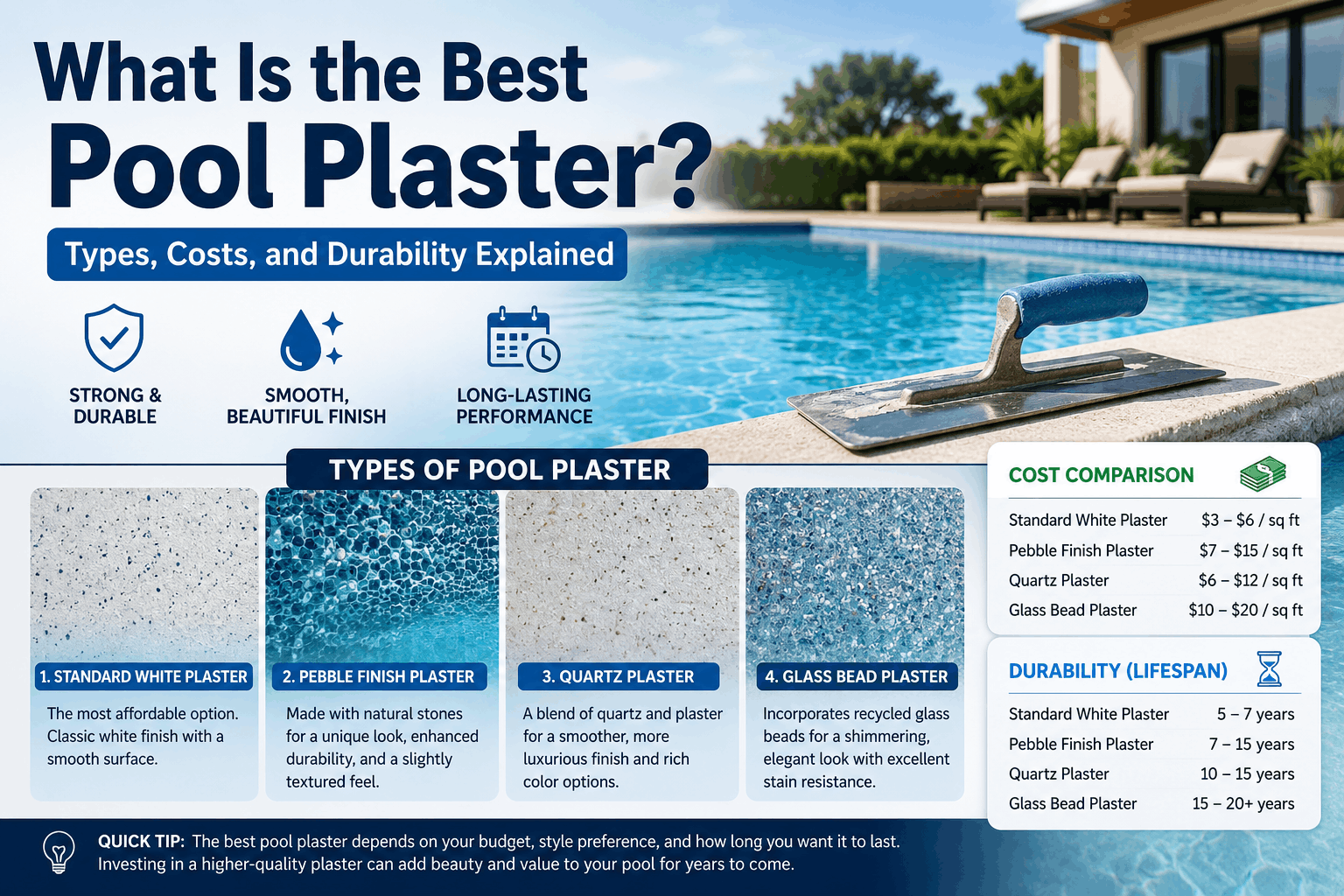
A swimming pool is not only about water and shape. The inside surface of the pool is just as important. This surface is called plaster, and it plays a big role in how the pool looks, feels, and lasts over time. Choosing the Best Pool Plaster is an important decision for any pool owner, especially when building a new pool or doing repairs.
Pool plaster creates a smooth layer inside the pool that holds water and protects the structure. It also affects how comfortable the pool feels under your feet and how easy it is to clean. If the plaster is good, the pool stays in better condition for a longer time.
In this guide, we will explain pool plaster types, costs, durability, and how to choose the right one in simple and clear language.
What Pool Plaster Actually Is
Pool plaster is a protective coating applied to the inside walls and floor of a swimming pool. It forms the final layer that touches the water.
It is usually made using cement mixed with fine materials. Once applied, it becomes hard and creates a waterproof surface.
This layer is important because it keeps water inside the pool and gives the pool a smooth finish that feels good to use.
Why Pool Plaster Is So Important
Pool plaster does more than just make the pool look nice. It helps protect the pool structure and improves overall performance.
A good plaster surface makes the water look clean and bright. It also helps control algae growth and makes cleaning easier.
Over time, plaster can wear out due to chemicals, sunlight, and constant water contact. That is why choosing the Best Pool Plaster matters for long-term use.
Types of Pool Plaster Explained
There are different types of pool plaster available today. Each type has a different look, feel, and lifespan.
White Pool Plaster
White plaster is the most basic and commonly used option. It gives a clean and simple look to the pool.
It makes water appear light blue and fresh. However, it may not last as long as newer options and can stain more easily.
It is often chosen for its low starting cost and simple style, but it may need more care over time.
Colored Pool Plaster
Colored plaster is similar to white plaster but includes added color materials. This allows homeowners to choose different shades.
It helps change the pool’s appearance and can make the water look deeper or more natural.
While it improves design options, the color may fade over time if not maintained properly.
Quartz Pool Plaster
Quartz plaster is stronger than regular plaster because it includes small quartz particles mixed into it.
It is smoother, more durable, and resists stains better than basic plaster. It also keeps its color for a longer time.
This option is often chosen for its balance between price and strength.
Pebble Pool Finish
Pebble finish uses small stones mixed into the plaster surface. This makes the pool more natural in appearance and very strong.
It lasts longer than standard plaster and handles chemicals and weather changes better.
Here are some key features of pebble finish:
- Very strong and long-lasting surface
- Natural and attractive pool appearance
- Low maintenance compared to basic plaster
- Slightly rough texture but very durable
Polished Aggregate Finish
This finish is made with small stones and minerals that are polished to create a smoother and shiny surface.
It is stronger than most plaster types and gives a premium look to the pool.
It also resists stains well and stays attractive for many years with proper care.
Pool Plaster Types and Comparison Table
How to Choose the Best Pool Plaster
Choosing the Best Pool Plaster depends on how you use your pool and what you expect from it.
If you want a low-cost option, basic plaster may work. If you want something stronger and longer lasting, pebble or quartz finishes are better choices.
Climate also matters. In hot or changing weather, stronger materials last longer. Maintenance needs should also be considered before making a decision.
Durability of Different Pool Plaster Types
Not all plaster types last the same amount of time. Basic plaster may show wear sooner, while stronger finishes last many years.
Pebble and polished finishes are the most durable options because they resist damage and stains better.
Water care also affects durability. If pool water is not balanced properly, even strong plaster can get damaged over time.
Cost of Pool Plaster Explained
The cost of pool plaster depends on the type of material, labor work, and pool size.
Basic plaster is the cheapest option, while pebble and polished finishes cost more.
Even though premium options cost more at the start, they often save money later because they need fewer repairs.
Maintenance Tips for Pool Plaster
Taking care of pool plaster helps it last longer and stay in good condition.
Regular cleaning keeps the surface smooth and free from dirt. Water balance is also very important to avoid damage.
Fixing small cracks early prevents bigger problems later and helps protect the pool surface.
Signs Your Pool Plaster Needs Replacement
Pool plaster does not last forever. Over time, it starts to show signs of wear.
Rough surfaces, stains, cracks, or fading color are common warning signs. If the pool feels uncomfortable to touch or looks dull, it may need new plaster.
Fixing it early helps avoid bigger repair costs later.
Common Mistakes When Choosing Pool Plaster
Many people choose plaster only based on price, which is not always a good idea.
Some also focus only on appearance without thinking about long-term maintenance.
Ignoring weather conditions and pool usage can also lead to poor choices.
A balanced decision is always better for long-term results.
Future of Pool Plaster Materials
Pool plaster materials are improving every year. New options are becoming stronger and easier to maintain.
In the future, more durable and low-maintenance materials will be used. Eco-friendly options may also become more common.
The goal is to make pools last longer with less effort and cost.
Conclusion
Choosing the Best Pool Plaster is an important step in building or maintaining a swimming pool. It affects how the pool looks, how long it lasts, and how easy it is to maintain.
Each type of plaster has its own benefits. Some are simple and affordable, while others are stronger and last longer.
By understanding your needs, budget, and usage, you can choose the right plaster and enjoy a clean, strong, and beautiful pool for many years.
FAQs
1. What is pool plaster in simple terms?
Pool plaster is a smooth layer applied inside a swimming pool to hold water and protect the structure. It gives the pool its final surface, improves appearance, and makes swimming more comfortable while also helping maintain water quality.
2. Which is the Best Pool Plaster for long use?
Pebble and polished aggregate finishes are often considered the Best Pool Plaster for long use because they are strong, last many years, and resist damage. They also handle chemicals and weather changes better than basic plaster options.
3. How long does pool plaster usually last?
Pool plaster life depends on the type and care. Basic plaster may last a few years, while stronger options like pebble or quartz can last much longer. Proper water balance and regular care help extend its lifespan significantly.
4. Is pool plaster expensive to replace?
The cost of replacing pool plaster depends on pool size and material choice. Basic plaster is cheaper, while premium finishes cost more. However, better materials often save money over time because they need fewer repairs and last longer.
5. How do I take care of pool plaster?
Pool plaster should be cleaned regularly and kept in balanced water conditions. Avoid harsh chemicals and fix small cracks early. Good maintenance helps the plaster stay smooth, clean, and strong, extending the life of the entire pool surface.